
Soft Skills
Team
Elevate your workplace influence and clarity by mastering these 6 fundamental communication strategies.
Every job description demands excellent communication skills, but what does that actually mean? Is it simply the ability to talk, explain, or be polite and inclusive? There’s no shortage of self-help books and online courses promising to teach the art of communication. But in reality, excellent communication skills require years of practice, countless hard conversations, and a willingness to navigate disagreement, whether with people you admire, respect, or even dislike.
From my experience as a Product Designer, communication is more than just talking – it’s about understanding, clarity, and collaboration. Here are the key principles that guide me:
Everyone Wears Their Own Glasses
We are all humans – with our own perspectives, experiences, and biases. No one sees the world exactly the same way as you do. Unless you are a Tibetan guru with a truly objective mind, you filter every conversation through your own lens.
When communicating, remember that:
👽 People may not see what you see – their experience and context are different.
💁 Disagreement is natural – it doesn’t mean someone is against you; they just have a different viewpoint.
👻 Expect the unexpected – stakeholders, engineers, or product owners might suggest solutions you never considered.
🫂 Being mindful of this makes collaboration smoother and reduces frustration when others don’t immediately see things the way you do.


What Do You Mean Exactly?
I ask this question all the time.
Why?
Because I never assume.
Since everyone wears different glasses, it’s crucial to clarify what others really mean. Sometimes, getting to the core issue requires digging through layers of assumptions and vague statements. Ask questions. Then ask more. It may take five or ten follow-ups to uncover the true intent behind a request. But in the end, clarity saves time and prevents misunderstandings.
There Are No Stupid Questions
If no one is asking questions, it means one of two things:
They understand everything perfectly OR they are completely lost.
Don’t be afraid to ask questions – even to your CEO. If something is unclear, seek answers rather than pretending to understand. What helps me is detaching myself from the fear of asking. My job isn’t to appear smart; my job is to gather the right information to create the best product experience.
My job isn’t to appear smart; my job is to gather the right information to create the best product experience.

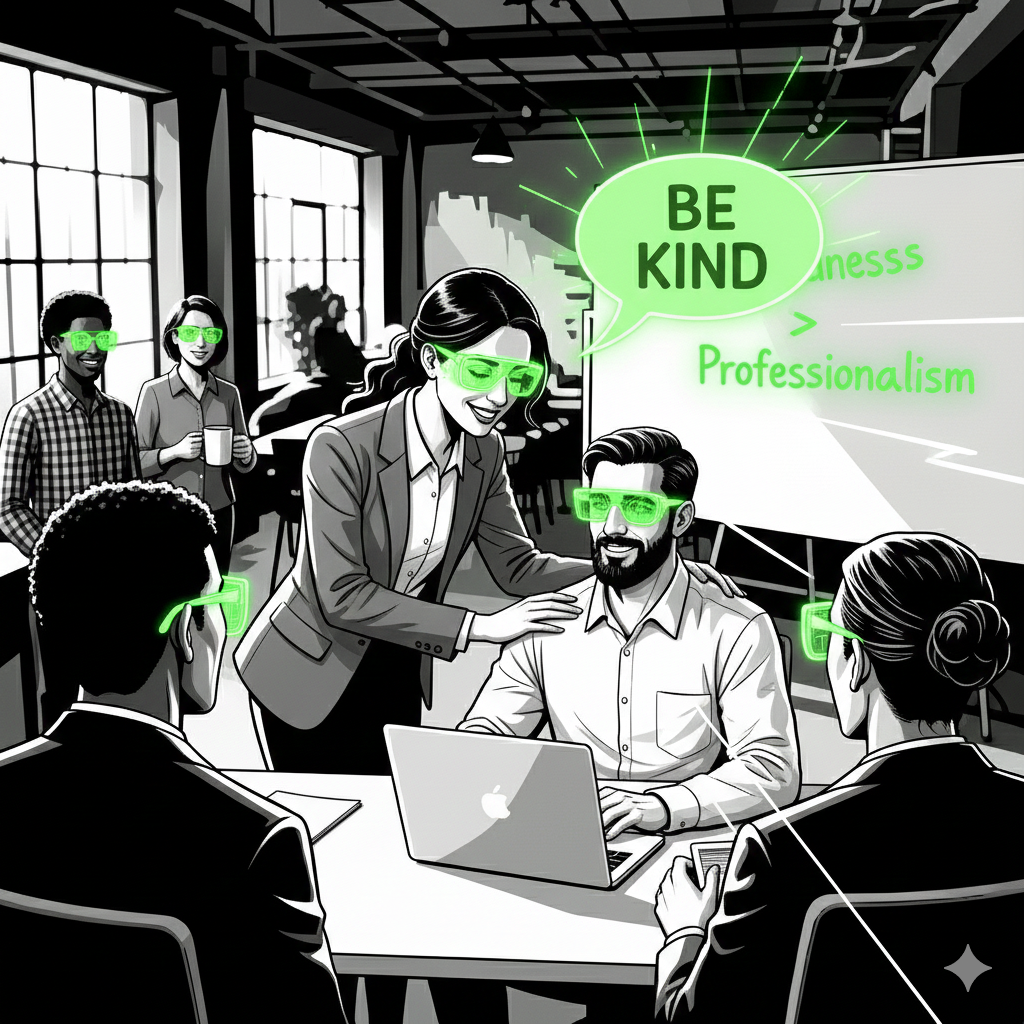
Be Kind, Be Clear
Kindness is free – and it works wonders.
Kindness doesn’t mean being a pushover. It means:
• Recognizing that the person in front of you has their own challenges and struggles.
• Approaching collaboration with a positive attitude rather than frustration.
• Using a kind tone, which can significantly improve teamwork and alignment.
• A little kindness can turn a difficult conversation into a constructive one.
• We often emphasize professionalism in the workplace, but kindness is just as important.
Listen – Really Listen
Listening isn’t just about hearing words. It’s about:
• Absorbing the meaning behind them.
• Understanding the speaker’s concerns, needs, and goals.
• Not just waiting for your turn to speak.
In product design, listening to feedback, user pain points, and stakeholder needs is just as important as presenting your ideas.


Feedback: Giving and Receiving It Well
Feedback is the foundation of growth.
But how you give and receive it makes all the difference.
Giving Feedback: Be clear, constructive, and considerate. Positive feedback motivates, while negative feedback should be framed as a tool for improvement, not criticism.
Receiving Feedback: Detach your ego from the feedback you receive. It’s not personal – it’s about improving your work, processes, or collaboration. The best way to grow is to listen openly and adapt accordingly.
Conclusion
Effective communication is more than just words – it’s about understanding perspectives, clarifying intent, asking questions, listening deeply, and giving/receiving feedback with kindness.
Mastering communication doesn’t happen overnight. But by applying these principles, you can foster better collaboration, build stronger relationships, and ultimately create better products.